


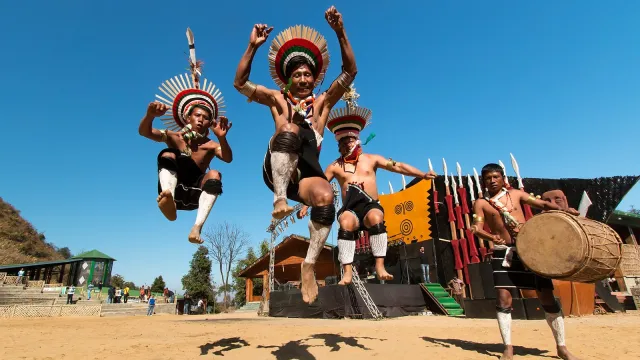
Hornbill Festival preparations are beginning well ahead of Nagaland’s flagship cultural celebration, with the state already putting stronger administrative structures in place for the 2026 edition. The official Tourism Nagaland calendar lists the Hornbill Festival from December 1 to 10, 2026.
The early planning comes as the festival continues to grow as a major cultural and tourism event. Moreover, the Nagaland Government has established a High Powered Committee to provide policy direction, inter-departmental coordination and strategic oversight for the festival.
However, available official records do not yet confirm a new 2026 round of commercial stall bookings or a completed stall-layout plan. Therefore, the current preparation phase is better described as early institutional and logistical planning rather than confirmed finalisation of all bookings and layouts.
Gopal Roy Demands Puja Grants for Tripura Clubs
Hornbill Festival Preparations Begin With Early Coordination
The 2026 Hornbill Festival will mark the 27th edition of Nagaland’s annual celebration. Tourism Nagaland has scheduled the event for December 1–10. The festival will continue its established role of showcasing the state’s cultural heritage.
The government has already created a standing High Powered Committee to oversee the festival. Chief Minister Neiphiu Rio serves as chairman. Senior ministers, advisers and officials from Tourism, Art and Culture, Industries and Commerce, Horticulture and other departments also serve on the committee.
Furthermore, the committee handles strategic planning, coordination and monitoring. Its responsibilities also include site allotment, policy decisions and monitoring rates for festival materials and events.
This structure supports earlier coordination instead of relying mainly on preparations before the December event. Such planning can help departments coordinate infrastructure, public services, cultural programmes and visitor arrangements.
The approach also follows lessons from previous editions. In August 2025, the Chief Secretary held a Hornbill preparedness meeting. He stressed the importance of starting preparations early and forming subcommittees for better coordination.
Stall Planning and Site Management Gain Importance
Stall management remains an important part of the Hornbill Festival. The event brings together government departments, artisans, entrepreneurs, cultural groups and businesses.
In the 2025 edition, the Directorate of Industries and Commerce issued details of stalls at the Handloom and Craft Pavilion. Government agencies, entrepreneurs and artisans received spaces under the allocation.
The 2025 allocation included handicrafts, textiles, handloom products and food products. It also included service organisations. Therefore, the festival functions as more than a cultural programme. Dedicated spaces also support local products and economic activity.
Consequently, stall planning requires coordination among the festival administration, departments and exhibitors. Layout decisions can affect visitor movement and product visibility. They can also influence vendor access and venue organisation.
However, no official source located so far provides a final 2026 stall map. No source also confirms that all commercial stalls have already been booked. Therefore, claims about a completed layout would be premature.
Instead, the new governance structure provides a framework for handling site allotment. It can also guide other festival-related decisions.
Tourism Planning Targets Growing Visitor Interest
The early 2026 Hornbill Festival preparations also reflect the event’s importance to Nagaland’s tourism economy. Chief Minister Neiphiu Rio has described the festival as an important source of employment and livelihood opportunities.
These opportunities involve artisans, musicians, performers, entrepreneurs and hospitality businesses. According to the Chief Minister’s recent remarks, the festival attracted just over 28,000 visitors in 2010. Visitor numbers crossed 214,000 by 2025.
The government therefore views the festival as both a cultural celebration and an economic platform.
Moreover, the Tourism Department’s official calendar already lists the 2026 dates. This gives visitors and tourism businesses an early reference point for planning.
Early preparation can help accommodation providers, transport operators, artisans and event participants. Visitors from outside Nagaland also need time to arrange transport and accommodation.
The government’s experience with international participation also highlights the need for advance planning. In 2025, Nagaland sought timely action on Protected Area Permit arrangements for international delegates. Officials noted that late decisions could complicate international travel planning.
Therefore, advance planning can give domestic and international visitors greater predictability. It can also give local businesses more time to prepare for the festival season.
2026 Hornbill Festival Moves Toward Structured Preparation
The High Powered Committee provides a central mechanism for coordinating the 2026 Hornbill Festival. Senior representatives from several departments form part of the committee. Their involvement reflects the festival’s requirements across tourism, culture, infrastructure, commerce and administration.
At the same time, the government has assigned site allotment and rate monitoring to the committee. These functions relate directly to stall management and commercial activities at the festival.
The approach also builds on earlier preparation meetings. In 2025, officials reviewed roads, sanitation, transportation, electricity and logistics before the festival began. The Chief Secretary asked departments to prepare concrete action plans and proposals.
Furthermore, the festival requires coordination beyond cultural performances. Visitor movement and public facilities also require attention. Venue management, transport, sanitation and commercial participation remain important parts of the preparations.
For 2026, the official Tourism Nagaland platform has already listed the Hornbill Festival among upcoming events. Therefore, the basic event calendar is in place. Detailed operational arrangements are still developing.
The next stages should provide greater clarity on stall allotments and venue arrangements. They should also clarify participating organisations and other operational details. Until official notifications confirm these elements, they should not be described as final.
Conclusion
The 2026 Hornbill Festival preparations are starting early, with Nagaland establishing a stronger administrative framework for the December celebration. The official tourism calendar confirms the festival dates as December 1–10, 2026.
The newly constituted High Powered Committee handles strategic direction, inter-departmental coordination and site allotment. It will also oversee festival-related policy decisions and rate monitoring.
Detailed 2026 stall bookings and a final venue layout have not yet received independent confirmation. However, the early planning structure provides a framework for more organised preparations.
Consequently, the coming months will likely focus on venue planning, participation, logistics and visitor arrangements. Nagaland will continue preparations ahead of the 27th edition of the Hornbill Festival.
FAQs
When will the 2026 Hornbill Festival take place?
The official Tourism Nagaland calendar lists the 2026 Hornbill Festival for December 1 to 10.
What is the focus of the Hornbill Festival preparations?
The preparations involve strategic coordination, site management, logistics, tourism planning, cultural programming and arrangements for participating organisations.
Have all 2026 Hornbill Festival stalls been booked?
Available official information does not yet confirm that all commercial stalls for the 2026 festival have been booked or that the final stall layout has been published.
Who oversees the Hornbill Festival’s strategic planning?
A High Powered Committee headed by the Chief Minister has been constituted to provide policy direction, coordination and strategic oversight for the festival.
Why are Hornbill Festival preparations starting early?
Early planning allows government departments, businesses, artisans, performers and tourism stakeholders to coordinate infrastructure, participation and visitor arrangements well before the December event.