



A Naga insurgent group leader has issued a public statement reiterating the organisation’s commitment to peaceful dialogue and negotiated settlement processes. The statement comes amid ongoing efforts to maintain stability and advance political discussions in the region. Moreover, the leader emphasized that dialogue remains the preferred path for resolving long-standing issues. The development signals continued engagement with peace-building mechanisms.
Guwahati University Hosts National Seminar
Security Forces Rescue 115 Human Trafficking Victims From Assam; 9 Traffickers Arrested in Bihar
Renewed Call for Dialogue-Based Resolution
Naga insurgent group leader issues public statement reiterating commitment to peaceful dialogue, stressing that negotiations remain central to addressing political demands. Consequently, the statement highlights a continued willingness to engage with established peace processes.
The leader underlined that dialogue provides a structured framework for resolving disputes. Moreover, peaceful engagement is seen as essential for achieving long-term stability. Therefore, non-violent communication is being prioritized over confrontation.
Officials familiar with the situation noted that such statements often align with ongoing negotiation efforts. Furthermore, they reflect a broader trend toward sustained peace talks. As a result, confidence in dialogue-based solutions is being reinforced.
Meanwhile, civil society groups have welcomed the reaffirmation of peaceful intent. Consequently, hopes for continued stability in affected regions have been strengthened.
Emphasis on Sustaining Peace Efforts in the Region
The Naga insurgent group leader issues public statement reiterating commitment to peaceful dialogue while emphasizing the importance of maintaining peace in the region. Moreover, stability is considered essential for development and public welfare. Therefore, all stakeholders are being urged to support non-violent approaches.
The statement highlighted the need for trust-building measures between negotiating parties. Consequently, sustained engagement is seen as crucial for progress. Such approaches help reduce misunderstandings and improve communication channels.
Furthermore, peace processes often require long-term commitment from all sides. As a result, incremental progress is being encouraged rather than abrupt resolutions.
Meanwhile, monitoring agencies continue to observe developments closely. Similarly, dialogue facilitators remain engaged in coordination efforts.
Context of Ongoing Political Negotiations
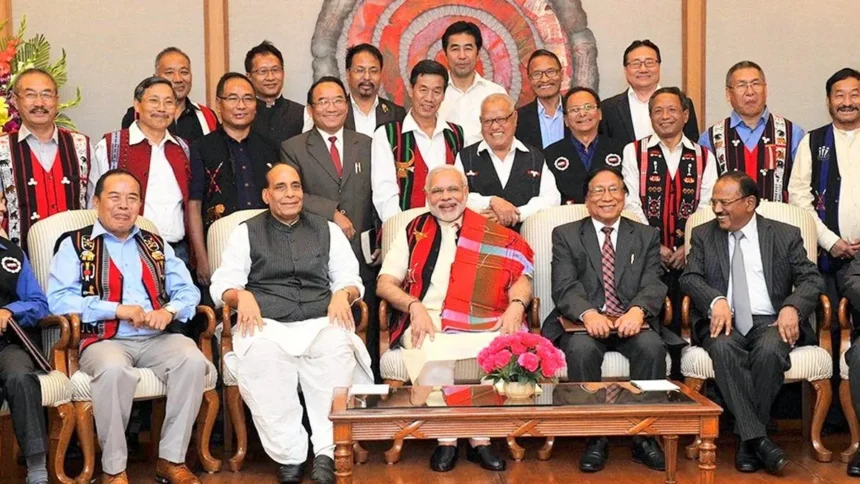
The Naga insurgent group leader issues public statement reiterating commitment to peaceful dialogue amid ongoing political negotiations involving multiple stakeholders. Moreover, these discussions aim to address historical and constitutional concerns. Therefore, dialogue remains a key mechanism for resolution.
Negotiation frameworks have evolved over time to include various representatives. Consequently, structured talks have helped maintain communication channels. Such frameworks are essential for conflict resolution.
Furthermore, previous agreements have laid the groundwork for continued discussions. As a result, the current statement reinforces continuity in the peace process.
Meanwhile, official responses have focused on maintaining calm and stability. Similarly, efforts to avoid escalation are being prioritized.
Role of Civil Society in Supporting Peace
Civil society organizations play an important role in supporting peaceful dialogue initiatives. Moreover, community leaders often act as mediators in maintaining trust between groups. Therefore, their involvement is crucial in peace-building efforts.
The statement by the insurgent leader has been viewed as a positive signal by some community representatives. Consequently, there is cautious optimism regarding continued engagement. Such reactions reflect the importance of grassroots support.
Furthermore, awareness campaigns promoting peace have been ongoing in affected areas. As a result, public participation in dialogue processes has increased.
Meanwhile, educational institutions and youth groups are also contributing to peace messaging. Similarly, collaborative initiatives are being encouraged.
Conclusion
Naga insurgent group leader issues public statement reiterating commitment to peaceful dialogue, reinforcing the importance of negotiation-based solutions in the region. Moreover, the statement highlights continued engagement in peace processes.
The development supports ongoing efforts to maintain stability and encourage constructive dialogue among stakeholders. Therefore, it contributes positively to long-term peace-building initiatives.
As Naga insurgent group leader issues public statement reiterating commitment to peaceful dialogue, it underscores the continued relevance of dialogue in resolving complex political issues.
FAQs
1. What did the insurgent leader state?
A commitment to peaceful dialogue.
2. What is the main focus of the statement?
Negotiated and dialogue-based resolution.
3. Why is this important?
It supports peace and stability in the region.
4. Who may benefit from this?
Local communities and stakeholders in peace talks.
5. What approach is emphasized?
Non-violent and dialogue-driven engagement.