





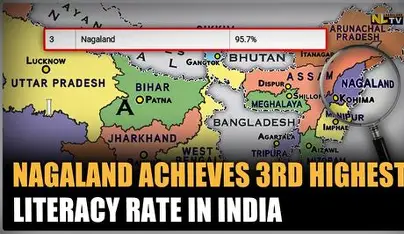
Nagaland has become the third most literate state in India, recording a literacy rate of 95.7 per cent, Advisor for School Education and SCERT Kekhrielhoulie Yhome said on September 5. He credited the achievement largely to the sustained efforts of teachers across the state. Nagaland’s literacy rate stood at just 21.95 per cent when the state attained statehood in 1963. Today, only Kerala and Mizoram rank ahead of Nagaland in literacy. Yhome made the announcement during the state-level Teachers’ Day celebration in Kohima.
Read More: Sikkim University Mass Communication Admissions Fall
Key Facts
- State: Nagaland
- Current literacy rate: 95.7%
- National ranking: Third
- Teachers in schools: 32,714
- 1963 literacy rate: 21.95%
- Event: State-level Teachers’ Day celebration
- Venue: Kohima
- National Teachers’ Award: R Ronald Meru
Nagaland Records Major Literacy Growth
Speaking at the Teachers’ Day programme, Yhome highlighted Nagaland’s remarkable progress in education since statehood.
The state recorded a literacy rate of only 21.95 per cent in 1963. However, decades of efforts in education have helped push the figure to 95.7 per cent.
Yhome said teachers played a major role in this transformation. According to him, 32,714 teachers currently work in government and private schools across Nagaland.
Teachers Credited for Education Progress
Yhome described teaching as one of the most noble professions. He said teachers do more than deliver lessons because they also guide and care for students.
He added that a teacher’s greatest reward comes from seeing students succeed in life. Therefore, he credited the teaching community for helping Nagaland achieve its current literacy status.
Government Focuses on Three Education Pillars
Yhome said the Nagaland government plans to strengthen school education around three major pillars: infrastructure, human resources and curriculum.
First, the government aims to improve school infrastructure. Yhome acknowledged that several schools still lack basic facilities, including toilets, which particularly affects girl students.
The government plans to address these gaps through development projects and gradually improve facilities across schools.
Teacher Training and Administration
The second pillar focuses on human resources. The government plans to strengthen teacher training, improve human resource management and increase coordination between schools and field offices.
Officials also want to improve administration and governance. In addition, the government plans to create a stronger school feeder system and provide greater personalisation within the education system.
Curriculum Reform to Prepare Students for the Future
Curriculum redesign will form the third and perhaps most important pillar of the education strategy.
Yhome said schools must prepare students for a rapidly changing world. The education system, he added, needs to equip Gen Z, Gen Alpha and future generations with global 21st-century skills.
“We are building a generation of leadership, and that comes through our school ecosystem,” he said.
Naga Teacher Receives National Award
Yhome also congratulated R Ronald Meru, a teacher from Government Higher Secondary School, Sechu Zubza, for receiving the National Teachers’ Award in New Delhi.
He said Meru’s selection among teachers from across India reflects the talent and dedication present within Nagaland’s education system.
12 Teachers Honoured in Kohima
The state government organised the Teachers’ Day celebration through the School Education Department.
During the programme, officials honoured 12 teachers from government and private institutions for their dedication to students and the teaching profession. Authorities also presented the School Safety Excellence Award.
Teachers’ Day falls on September 5 every year to mark the birth anniversary of former President and educationist Dr S Radhakrishnan.
Meanwhile, the Nagaland government has declared September 7 as a holiday for all educational institutions in honour of teachers.
Q&A
What is Nagaland’s current literacy rate?
Nagaland has recorded a literacy rate of 95.7 per cent.
What is Nagaland’s literacy ranking in India?
Nagaland is currently the third most literate state in the country.
Which states rank ahead of Nagaland?
Kerala and Mizoram rank ahead of Nagaland.
How many teachers work in Nagaland schools?
Around 32,714 teachers work in government and private schools across the state.
What are the government’s three education priorities?
Infrastructure, human resources and curriculum reform.
Location Context
Nagaland is an important state in Northeast India, and its rise in literacy highlights the region’s growing focus on education and human development.