





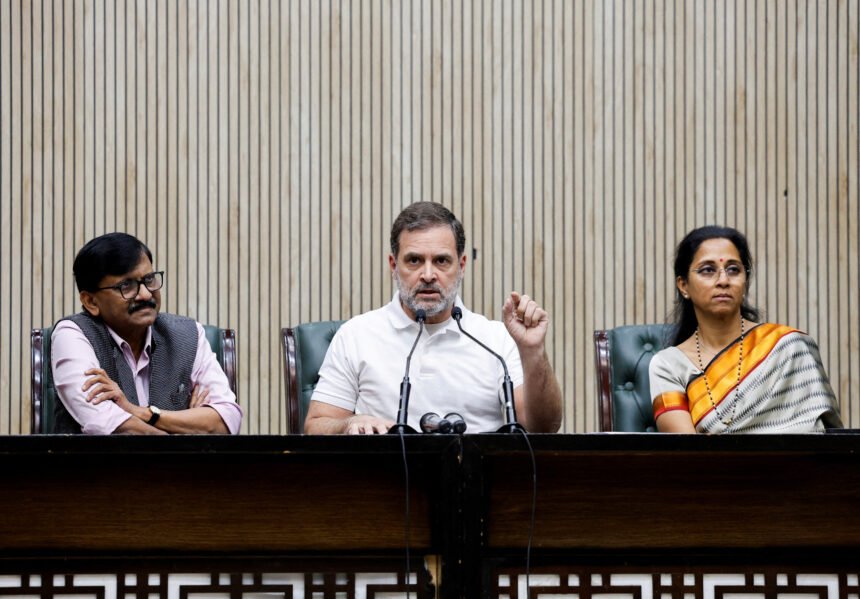
Several opposition leaders have sharply criticized the role and impact of election exit polls, alleging that previous projections were used as psychological pressure tactics aimed at influencing political narratives and public perception. The criticism has reignited debates over the role of exit polls in democratic processes, their influence on voters and political parties, and the need for greater transparency in electoral forecasting. Moreover, the remarks have intensified political discussions surrounding electoral communication and public opinion management.
Assam Launches Special Rural Livelihood Scheme in Dhubri, Expands Guaranteed Employment to 125 Days
Insurgent Killed During Churachandpur Operation
Opposition Leaders Question Credibility of Exit Poll Projections
Prominent opposition leaders have reportedly expressed concerns over the accuracy and political impact of previous exit poll predictions. Consequently, they have argued that certain projections created unnecessary political pressure and shaped public narratives before official election results were declared.
According to political observers, exit polls have long remained a contentious aspect of electoral politics due to their potential influence on public discourse and political strategy. Moreover, critics have frequently questioned their methodologies, sampling techniques, and interpretation of voter behavior. Therefore, the latest criticism has attracted significant political attention.
Opposition representatives maintained that electoral outcomes should ultimately be determined by official counting processes rather than pre-result projections. As a result, discussions regarding the role of exit polls in democratic systems have resurfaced.
Meanwhile, political analysts continue to evaluate the broader impact of election forecasting on political campaigns and public perception.
Exit Polls Continue to Spark Political Debate
Exit polls remain an important yet controversial component of electoral coverage in many democratic countries. Moreover, supporters argue that they provide valuable insights into voting patterns and electoral trends, while critics contend that they may influence political narratives and public expectations. Therefore, debates over their role continue to generate considerable interest.
Political experts observed that disagreements over exit poll findings frequently emerge following major elections. Consequently, questions regarding their accuracy and influence often become part of broader political discussions. Such debates contribute to ongoing conversations about electoral transparency and media responsibility.
Furthermore, opposition leaders have emphasized the importance of ensuring that electoral processes remain focused on official democratic procedures. As a result, demands for greater scrutiny of polling methodologies have periodically emerged.
Meanwhile, media organizations and polling agencies continue to defend the importance of statistical analysis and electoral forecasting.
Psychological Impact of Electoral Forecasts Under Scrutiny
The opposition’s criticism has also highlighted concerns regarding the psychological effects of election projections on political workers, supporters, and public opinion. Moreover, some political leaders argue that early projections can shape perceptions of electoral momentum and influence political discourse. Therefore, the issue remains a subject of ongoing debate.
Analysts noted that political communication strategies increasingly incorporate opinion polling and electoral forecasting as important campaign tools. Consequently, the interpretation and presentation of such data often attract scrutiny from political stakeholders. Such discussions reflect broader concerns regarding the relationship between media, politics, and public opinion.
Furthermore, experts have emphasized the need for transparency and methodological rigor in all forms of electoral research. As a result, debates regarding polling standards and public communication continue.
Meanwhile, political parties remain focused on strengthening their electoral strategies and organizational preparedness.
Electoral Transparency Remains a Central Concern
The latest controversy underscores the continuing importance of transparency, accountability, and public confidence in democratic processes. Moreover, political stakeholders across the spectrum continue to debate how electoral information should be presented and interpreted. Therefore, discussions regarding exit polls and electoral forecasting are expected to remain politically relevant.
Political observers emphasized that robust democratic systems depend on public trust in electoral institutions and procedures. Consequently, debates over polling practices and political communication remain important aspects of democratic discourse. Such discussions contribute to ongoing efforts to strengthen institutional credibility.
Furthermore, policymakers and political parties continue to engage in broader discussions regarding electoral reforms and democratic accountability. As a result, the role of exit polls is likely to remain a recurring topic of political debate.
Meanwhile, attention remains focused on ensuring that electoral outcomes are determined through transparent and established democratic processes.
Conclusion
The criticism by opposition leaders regarding previous exit poll projections has renewed discussions about the role of electoral forecasting, political communication, and democratic accountability. Moreover, the controversy highlights broader concerns about public perception, political strategy, and the influence of pre-result narratives.
As political debates over electoral transparency and media practices continue, exit polls are expected to remain an important and contested feature of democratic politics. Therefore, discussions regarding their methodology, presentation, and impact will likely continue to attract significant public and political attention.
The ongoing debate underscores the importance of transparency, institutional trust, and informed public discourse in democratic systems.
FAQs
1. What criticism did opposition leaders make about exit polls?
They alleged that previous exit poll projections acted as psychological pressure tactics and influenced political narratives.
2. Why are exit polls controversial?
Critics argue that they can shape public perception, while supporters view them as useful analytical tools.
3. Do exit polls determine election outcomes?
No, official election results are determined solely through the formal vote counting process.
4. Why do political parties scrutinize exit polls?
Parties often examine their accuracy, methodology, and potential impact on public opinion.
5. What broader issue does this debate highlight?
The debate highlights concerns about electoral transparency, media influence, and democratic accountability.