





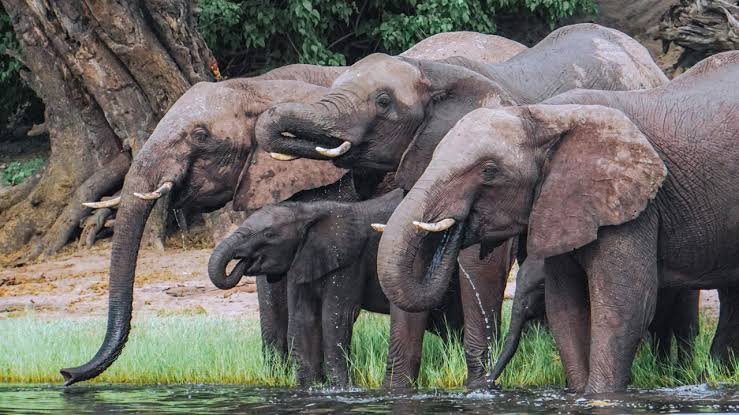
The Supreme Court has raised serious concerns over the allegedly hurried interstate transfer of five captive elephants from Assam to Tamil Nadu. The court stressed that authorities must strictly follow legal procedures before approving such movements. It also underlined the importance of verifying each elephant’s identity, ownership and transportation arrangements. The observations carry particular significance for Northeast India, where Assam holds a substantial population of captive elephants. The case has renewed attention on the responsibilities of forest departments and wildlife authorities. It also highlights the need for transparent checks to protect elephants from unlawful transfers and inadequate care.
Gauhati High Court Quashes Pranab Doley’s NSA Detention
Supreme Court Questions the Speed of Elephant Transfers
A Supreme Court bench led by Chief Justice of India Surya Kant examined concerns over the transfer of five elephants from Assam to temples in Tamil Nadu. The hearing took place on November 5, 2026, following a petition filed by People for Cattle in India.
The organisation questioned whether authorities had completed the required checks before allowing the elephants to move between states. It raised concerns about the speed of the approval process and the safeguards followed during transportation.
Senior advocate Meenakshi Arora, representing the organisation, told the court that the statutory framework requires several stages of verification and consultation. She submitted that the complete process ordinarily takes around 50 days.
However, one elephant reportedly reached Chennai within nine days of the transfer request. The journey covered nearly 3,000 kilometres from Assam.
The petitioner argued that officials could not have completed every prescribed verification and clearance within such a short period. Consequently, the organisation questioned whether authorities had followed the required procedures.
The Chief Justice observed that the court would have intervened if it had received timely information about a hurried exercise. He also reiterated that state governments and other authorities must comply with the Supreme Court’s directions.
Five Elephants Moved from Assam to Tamil Nadu
The case concerns five elephants transferred from Assam to temples in Tamil Nadu during September 2026. Their names are Durga, Hiralal, Shiva, Rupsing and Bijuli.
According to reports, the transfers took place between early and mid-September. The petitioner specifically highlighted the journey of Durga, a five-year-old female elephant.
The transfer request reportedly reached the authorities on September 4. Durga arrived in Chennai on September 13. This short interval became a central point in the legal challenge.
The petitioner also argued that an earlier High Court direction only required authorities to decide the pending application. It did not reportedly order the immediate transportation of the elephant.
Therefore, the organisation questioned the speed at which officials completed the approval process.
Meanwhile, the Supreme Court noted that all five elephants had already reached their destinations. The bench indicated that it could not order their return at that stage.
However, the court allowed the petitioner to withdraw its application. It also granted permission to approach the Supreme Court through an appropriate application in the ongoing captive-elephant proceedings.
This decision gives the organisation an opportunity to submit its findings and supporting documents before the court.
Captive Elephant Transfer Rules Require Multiple Checks
The Captive Elephant (Transfer or Transport) Rules, 2024, establish a detailed procedure for moving captive elephants between states. These rules operate under the Wildlife (Protection) Act, 1972.
They require officials to examine ownership records, veterinary information and the conditions at the proposed destination. Moreover, the rules involve forest authorities from both the originating and receiving states.
The process begins when an applicant submits a transfer request to the concerned Deputy Conservator of Forests. The officer must obtain a veterinary certificate and conduct a detailed inquiry.
The inquiry also includes physical verification of the facility where the elephant currently lives. Officials must examine the proposed destination as well.
After completing the initial checks, the officer forwards the application and reports to the Chief Wildlife Warden.
For an interstate transfer, the Chief Wildlife Warden of the originating state sends the application to the receiving state’s Chief Wildlife Warden. The receiving state then forwards the documents to its concerned forest officer.
That officer must inspect the proposed facility and submit a report. Subsequently, the receiving state’s Chief Wildlife Warden sends recommendations to the originating state.
Finally, the originating state’s Chief Wildlife Warden examines the records and decides whether to approve the transfer.
The rules also require the elephant’s genetic profile to appear in the ministry’s electronic monitoring application. This requirement helps authorities verify the animal’s identity and maintain reliable records.
Northeast Forest Departments Face Greater Responsibility
The Supreme Court’s observations underline the importance of coordination between forest departments. This responsibility becomes especially important when elephants move from Northeast states to distant destinations.
Assam has one of India’s largest captive elephant populations. Therefore, its forest authorities play a significant role in maintaining ownership records and monitoring animal welfare.
However, interstate transfers require cooperation beyond the originating state. The receiving state must also verify the proposed facility and assess whether it can provide suitable care.
For Northeast forest wings, the case reinforces the importance of complete documentation. Officials must check ownership certificates, genetic records and veterinary reports before processing applications.
They must also examine the purpose of each proposed transfer. The 2024 rules allow transfers under specified circumstances, including cases where an owner cannot maintain an elephant or where the animal may receive better care elsewhere.
Furthermore, authorities must ensure that transportation arrangements meet prescribed welfare conditions.
The rules require elephants to travel with a mahout and an elephant assistant. They also require a veterinary fitness certificate and suitable arrangements for food and water.
In addition, officials must follow veterinary advice regarding quarantine and the use of sedatives. These safeguards aim to reduce health risks during long journeys.
Supreme Court Continues Monitoring Captive Elephant Welfare
The latest hearing forms part of the wider Supreme Court proceedings concerning captive elephants across India. The main case, Wildlife Rescue and Rehabilitation Centre versus Union of India, concerns the welfare and treatment of elephants kept in captivity.
In an order dated August 18, 2026, the court issued several directions concerning their upkeep, healthcare and ownership records.
The bench directed the authorities to strengthen DNA profiling and update the Gajah Suchana application. It also sought information about whether officials had completed genetic profiling of captive elephants across different ownership categories.
Additionally, the court called for stronger healthcare arrangements. It asked the Union Government to consider effective systems for establishing specialised elephant clinics.
The court also stressed that authorities must not permit changes in ownership or interstate transfers outside the applicable legal framework.
These directions highlight the importance of monitoring elephants throughout their lives. They also place greater responsibility on forest departments and wildlife authorities.
Wildlife Groups Seek Stronger Accountability
People for Cattle in India has questioned the procedures followed in the Assam-to-Tamil Nadu transfers. The organisation has welcomed the Supreme Court’s emphasis on verification and legal compliance.
Its founder, Arun Prasanna, said the organisation would place its findings before the court. He also stressed that authorities must not bypass checks involving ownership, identity and transportation conditions.
The case could bring further attention to the implementation of the 2024 rules. It may also encourage closer scrutiny of how officials process transfer applications.
However, the allegations raised by the petitioner still require examination through the ongoing legal proceedings. The court has not issued a final finding that the transfers violated the law.
For now, the central issue remains whether the authorities completed every mandatory step before approving the movements.
Conclusion
The Supreme Court’s concern over the captive elephant transfers highlights the need for strict legal compliance. The Assam-to-Tamil Nadu case has raised questions about verification timelines and administrative oversight. Moreover, it reinforces the responsibility of Northeast forest departments to maintain accurate records and protect animal welfare. The ongoing proceedings will provide an opportunity to examine the petitioner’s evidence and strengthen accountability in future interstate transfers.
FAQs
1. Why did the Supreme Court question the elephant transfers?
The court expressed concern over the allegedly hurried transfer of five captive elephants from Assam to Tamil Nadu.
2. How many elephants were involved in the transfer?
Five elephants, named Durga, Hiralal, Shiva, Rupsing and Bijuli, moved from Assam to Tamil Nadu.
3. Which organisation challenged the transfer procedure?
People for Cattle in India raised concerns about the verification and approval process.
4. What is the Captive Elephant Transfer Rules, 2024?
These rules establish procedures for verifying ownership, checking facilities and regulating elephant transfers and transportation.
5. What role do forest departments play in interstate transfers?
Forest officials verify ownership records, inspect facilities, obtain veterinary reports and coordinate approvals between states.
6. Did the Supreme Court order the elephants to return to Assam?
No. The bench noted that all five elephants had already moved and allowed the petitioner to approach the court through the ongoing proceedings.