






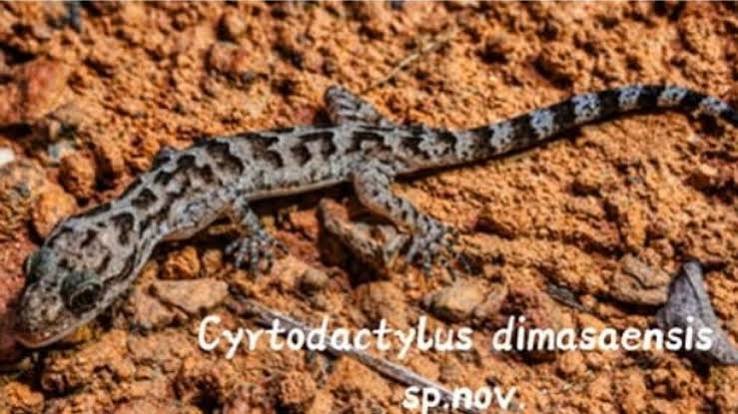
The Umrangso gecko has emerged as an important discovery for wildlife research in Assam, after scientists identified a previously undocumented species in the rocky habitats of Dima Hasao district. The finding highlights the region’s rich biodiversity and the need for further scientific exploration.
Researchers named the new species Cyrtodactylus dimaensis. Their findings, published in the Journal of Threatened Taxa, are based on detailed examinations of physical features and genetic evidence. The discovery adds to the growing understanding of Northeast India’s diverse reptile population.
Umrangso gecko discovery adds to Assam’s wildlife records
The newly identified reptile belongs to the genus Cyrtodactylus, commonly known as bent-toed geckos. Researchers placed it within the Cyrtodactylus khasiensis species group, which forms part of the wider Indo-Burma evolutionary lineage.
According to the published study, this discovery brings the number of described Cyrtodactylus species recorded from Assam to eight. The finding also highlights how the state’s varied landscapes continue to support reptile species that scientists have not fully documented.
Moreover, the discovery strengthens the scientific understanding of Dima Hasao, a district known for its hills, rocky formations and diverse natural habitats.
How scientists identified the Umrangso gecko
The research team included Krijoboti Thaosen, Mathipi Vabeiryureilai, Mara Duasa Hlychho and Hmar Tlawmte Lalremsanga, researchers associated with Mizoram University.
The scientists combined morphological examinations with molecular analysis to determine whether the gecko represented a distinct species. Morphological analysis involves studying an animal’s physical characteristics, while molecular analysis examines genetic evidence.
This combined approach helped researchers distinguish the Umrangso gecko from closely related species. They examined body features, including scale arrangements and specialised structures, and compared the results with those of other members of the same species group.
The study identified the new species as Cyrtodactylus dimaensis. Researchers also found that its closest known relative is Cyrtodactylus vanarakshaka, another bent-toed gecko described from Dima Hasao.
However, genetic differences supported the classification of the Umrangso specimen as a separate species. The researchers reported approximately five per cent genetic divergence between the two closely related species.
These findings demonstrate why detailed scientific examination remains essential for identifying reptiles that may resemble previously documented species.
Rocky habitats hold important biodiversity clues
The discovery draws attention to the ecological value of Umrangso’s rocky environments. Such habitats can provide specialised conditions that support animals adapted to particular landscapes.
Dima Hasao lies within the Indo-Burma biodiversity hotspot, a region recognised for its rich variety of plants and animals. Its complex terrain and differences in elevation create diverse ecological conditions across the district.
Furthermore, geographical separation can influence how animal populations evolve. When populations remain isolated over long periods, they may develop distinct physical and genetic characteristics.
The researchers’ findings support further investigation into these evolutionary processes. Nevertheless, additional surveys will be necessary to establish the species’ full distribution and understand its ecological requirements.
The discovery also reinforces the importance of examining less-studied habitats rather than focusing exclusively on well-known forests and protected areas.
What the Umrangso gecko means for conservation
Although the discovery adds an important entry to Assam’s biodiversity records, several questions remain unanswered. Scientists need more information about the species’ population, geographical range and potential threats before they can fully assess its conservation needs.
Habitat disturbance can affect wildlife that depends on specific environmental conditions. Therefore, documenting the locations where such species occur is an important step towards understanding their vulnerability.
Additionally, regular field surveys can help researchers identify other reptiles that remain undocumented in Northeast India. Detailed records can support future biodiversity assessments and guide conservation planning.
The study received support from the Ministry of Tribal Affairs and the Department of Science and Technology, Government of India. Such research funding helps scientists investigate lesser-known ecosystems and improve knowledge of regional wildlife.
However, discovering a new species does not automatically establish its conservation status. Further evidence will be needed to determine whether the reptile faces significant threats or requires specific protection measures.
Further research could reveal more hidden species
The discovery of Cyrtodactylus dimaensis highlights the scientific importance of Assam’s underexplored highlands. It also shows how combining field observations with genetic research can reveal biodiversity that earlier surveys may have overlooked.
Researchers have emphasised the need for further herpetological expeditions across the region. These efforts could improve understanding of reptile diversity and identify additional species or previously unrecorded populations.
Overall, the Umrangso gecko discovery offers fresh insight into the natural heritage of Dima Hasao. Continued research, careful habitat management and wider biodiversity surveys will be essential to understanding and protecting the region’s unique wildlife.
Assam: Nine Foreign Nationals Apprehended in Dhubri, Handed Over to BSF for Deportation