





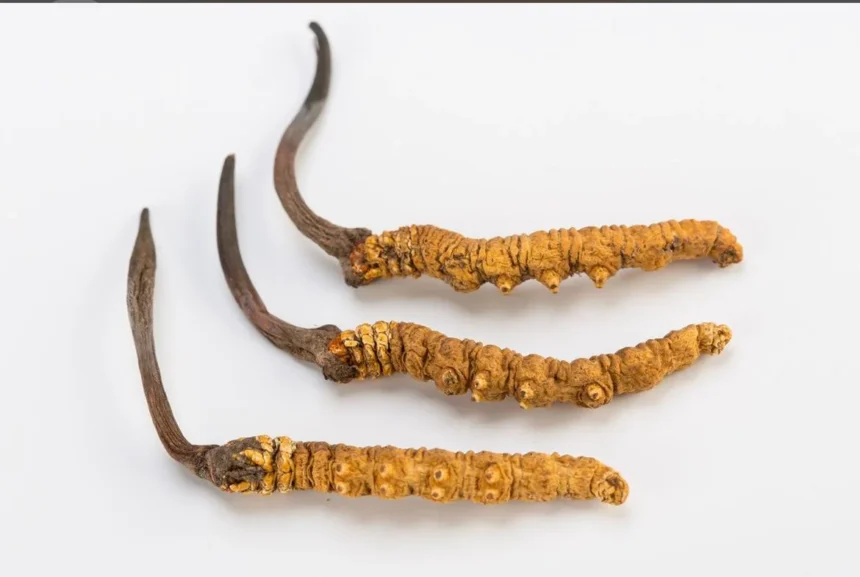
Scientists from Central Agricultural University, Pasighat, have discovered a rare Cordyceps mushroom in East Siang district, an unusual occurrence in a lowland ecosystem. Typically, Cordyceps species grow at elevations above 3,000–4,000 metres, making this finding scientifically significant. The research team, led by Dr Senpon Ngomle, has started molecular studies to identify the species.
Moreover, the fungus holds high medicinal and economic value due to its bioactive compounds. Researchers now aim to explore cultivation methods and unlock new livelihood opportunities. Overall, the discovery highlights the rich and largely unexplored biodiversity of Arunachal Pradesh.
Read More: East Garo Hills Migrant Worker Registration Rule
Key Facts:
- Location: East Siang district
- Institution: Central Agricultural University, Pasighat
- Lead Researcher: Dr Senpon Ngomle
- Discovery: Rare lowland occurrence of Cordyceps mushroom
- Usual Habitat: High altitudes above 3,000–4,000 metres
- Research Progress: Molecular identification and lab studies ongoing
- Potential Benefits: Medicinal use, nutraceutical value, local livelihoods
Discovery and Scientific Significance:
Researchers from Central Agricultural University identified a rare Cordyceps mushroom in East Siang district. This discovery stands out because Cordyceps usually thrives in cold, high-altitude Himalayan environments.
The team, led by Dr Senpon Ngomle, conducted field exploration and directly observed the fungus in a lowland ecosystem. Therefore, this finding challenges existing assumptions about the habitat range of Cordyceps species.
Additionally, the fungus belongs to a group of entomopathogenic species, which infect insect larvae. Because of this unique biological trait, scientists consider the discovery both rare and valuable for ecological research.
Medicinal and Economic Importance:
Cordyceps mushrooms contain several bioactive compounds such as cordycepin, adenosine, ergosterol, and polysaccharides. These compounds actively contribute to anti-inflammatory, antioxidant, antimicrobial, and neuroprotective properties.
As a result, traditional medicine systems in the Himalayas widely use Cordyceps. Furthermore, the global nutraceutical industry values it for its health benefits. Consequently, this discovery could support future pharmaceutical research and commercial applications.
At the same time, researchers see strong economic potential. If cultivation succeeds, local communities could benefit through sustainable harvesting and income generation.
Ongoing Research and Future Plans:
The research team has already started molecular identification to determine whether the specimen represents a known species or a new one. Meanwhile, laboratory culturing and strain analysis continue at the university’s research facilities.
In addition, scientists plan detailed mycological profiling and phytochemical studies. These efforts will help them better understand the fungus and its possible applications.
Dr Ngomle emphasized that the discovery reveals the untapped bioresource potential of the region. Similarly, Dr Yengkhom Disco Singh pointed out that Arunachal Pradesh offers vast opportunities for scientific exploration.
Need for Conservation and Research:
Researchers have urged authorities to promote systematic fungal biodiversity studies across the state. Moreover, they recommend expanding medicinal mushroom research and improving molecular documentation.
They also stress conservation efforts to protect rare species and their habitats. Without proper measures, valuable bioresources could face threats from environmental changes and overexploitation.
Question & Answer Section:
Q1: What did scientists discover in East Siang?
Scientists discovered a rare Cordyceps mushroom in a lowland area.
Q2: Why is the discovery important?
Because Cordyceps usually grows in high-altitude regions, this finding is unusual and scientifically valuable.
Q3: Who led the research?
Dr Senpon Ngomle from Central Agricultural University led the research team.
Q4: What are the uses of Cordyceps?
It offers medicinal benefits such as anti-inflammatory and antioxidant effects.
Q5: What will researchers do next?
They will conduct molecular identification, lab studies, and explore cultivation methods.
Location Context:
Arunachal Pradesh lies within the Eastern Himalayas and ranks among the world’s richest biodiversity hotspots. Therefore, discoveries like this reinforce the region’s importance for ecological and scientific research.
Also Read: Sonowal Congratulates Sarma After NDA’s Big Assam Win – Borok Times