





Gaurav Gogoi on ECI became a major political flashpoint after the Congress leader demanded Chief Election Commissioner Gyanesh Kumar’s resignation, accusing the poll panel of losing its constitutional authority. The remarks came amid growing opposition criticism of the Special Intensive Revision (SIR) of electoral rolls.
Gogoi argued that the Election Commission of India (ECI) must protect voters’ rights and maintain public confidence in elections. However, his accusations remain political allegations, while the Commission has defended its decision-making process amid the controversy.
Gaurav Gogoi on ECI and the Demand for Resignation
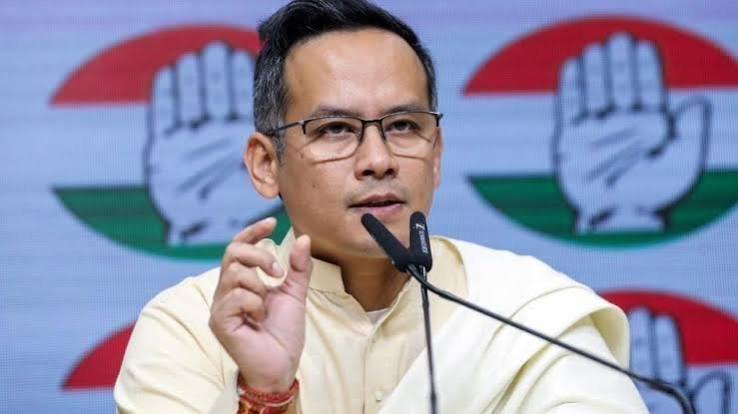
Gaurav Gogoi, president of the Assam Pradesh Congress Committee and a senior Congress leader, intensified his criticism of Kumar during a protest in Guwahati on September 25, 2026. He demanded the Chief Election Commissioner’s immediate resignation and called for legal action over alleged irregularities in the functioning of the poll panel.
Police detained Gogoi and several other Congress leaders after they attempted to cross barricades during the demonstration. The protesters had planned to march from the party headquarters, Rajiv Bhawan, towards the Chief Electoral Officer’s office.
Gogoi accused the Commission of failing to safeguard electoral rolls and protect citizens’ voting rights. He also criticised the wider political leadership, alleging that decisions affecting voters had undermined democratic principles.
Moreover, the Congress leader argued that public trust in the electoral process depends on an impartial and accountable Election Commission.
Gaurav Gogoi on ECI Raises Questions Over Voter Rolls
The controversy centres on the Special Intensive Revision, an exercise intended to review and update electoral rolls. The process has drawn criticism from opposition parties over voter deletions, registration procedures and transparency.
Gogoi’s remarks followed reports that Election Commissioners Sukhbir Singh Sandhu and Vivek Joshi had raised objections to aspects of decisions linked to the revision exercise. The reported concerns included changes to voter registration procedures and the handling of electoral data.
The reports raised questions about internal consultation and how the Commission records and addresses disagreements. Consequently, opposition leaders called for greater transparency about decisions that could affect citizens’ participation in elections.
However, the Election Commission has maintained that differing views, observations and technical suggestions form part of its internal decision-making process. It has described such exchanges as normal institutional checks rather than evidence that the electoral system has failed.
Gaurav Gogoi on ECI and Constitutional Accountability
The dispute has also renewed debate over the constitutional responsibilities of the Election Commission. Article 324 of the Constitution gives the Commission authority over the supervision, direction and control of elections to Parliament, state legislatures, and the offices of the President and Vice-President.
This responsibility makes public confidence in the institution especially important. Voters must be able to understand how electoral rolls are prepared, how names are added or removed, and how affected citizens can challenge errors.
Gogoi’s criticism focuses on whether the Commission has fulfilled these responsibilities impartially. Nevertheless, allegations of misconduct do not establish a constitutional violation by themselves. Any such conclusion requires examination of the relevant decisions, evidence and applicable law.
Additionally, the controversy has brought renewed attention to the legal framework governing the appointment and removal of election commissioners. Congress leaders have questioned whether existing safeguards and procedures provide sufficient accountability.
Gaurav Gogoi on ECI Sparks Wider Opposition Response
The criticism has extended beyond Assam. Congress leaders and opposition groups have organised demonstrations and demanded Kumar’s resignation, alongside calls for greater transparency in electoral-roll revisions.
On September 29, the Congress Working Committee adopted resolutions seeking accountability over the SIR process. Its demands included publishing information about changes to voter lists, providing remedies for people whose names were removed, and allowing timely access to electoral data.
Meanwhile, the Election Commission has defended its internal procedures. The dispute therefore reflects competing claims about transparency, voter protection and the independence of constitutional institutions.
For the opposition, the central concern is whether electoral procedures provide sufficient safeguards against wrongful exclusion. For the Commission, maintaining accurate voter lists remains an important part of protecting electoral integrity.
Gaurav Gogoi on ECI Keeps Focus on Public Trust
The confrontation has placed the Election Commission’s accountability at the centre of a wider political debate. Gogoi’s demand for Kumar’s resignation reflects the Congress party’s position that the current controversy requires serious scrutiny.
However, the allegations must be assessed separately from established facts. Transparent explanations, accessible correction procedures and clear records of decisions could help address public concerns over voter registration.
Ultimately, the dispute raises an important question for India’s electoral institutions: how can they demonstrate that every eligible citizen’s voting rights receive equal protection? Further scrutiny of the disputed procedures and the Commission’s responses will shape the debate over public confidence in the electoral process.
First Major Snowfall Transforms North Sikkim’s Zero Point Into a High-Altitude Winter World