




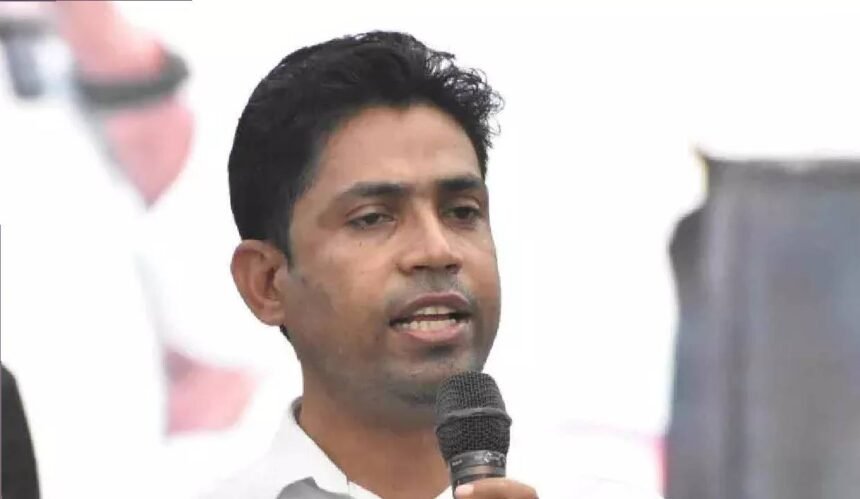
TMC Distances From Exit after the Trinamool Congress leadership publicly clarified that candidate Jahangir Khan’s sudden withdrawal from the Falta assembly repoll was not an organizational decision. The party stated that the move was “strictly personal” and attempted to separate its official position from the development that reshaped the high-profile contest in South 24 Parganas. The announcement immediately triggered political reactions and renewed debate over the circumstances surrounding the withdrawal.
Tripura Broadband Expansion Accelerates Rural Connectivity
Arunachal Hydropower Project Receives Key Clearance
Party Leadership Clarifies Its Stand
The Trinamool Congress moved quickly after reports of the withdrawal emerged. However, party leaders stressed that the decision did not reflect campaign strategy or direction from the high command.
Meanwhile, the party said it had received information regarding Khan’s decision but initially lacked complete clarity on the reasons behind it. Party spokespersons maintained that the organization remained committed to contesting political battles despite recent developments.
Additionally, the party released a public statement asserting that the withdrawal should be viewed as an individual choice rather than a broader political signal.
Withdrawal Sparks Political Speculation
The timing of the withdrawal generated immediate attention because it came only days before scheduled repolling in Falta. Consequently, political observers began examining whether the move reflected local electoral calculations, pressure, or personal considerations.
At the same time, Jahangir Khan publicly explained that development commitments for the constituency influenced his decision. He stated that promises related to local growth and peace shaped his choice to step away from the contest.
However, the Trinamool Congress presented a different political reading of the situation and argued that conditions in the constituency had become increasingly difficult after election results were declared earlier this month.
TMC Raises Concerns Over Political Environment
TMC Distances From Exit while simultaneously alleging that workers in Falta faced mounting pressure after the election outcome. The party claimed that arrests and organizational disruption affected local operations.
Furthermore, party statements alleged that more than 100 workers had been arrested in the constituency and that several local offices experienced disruption or closure. The party argued that such developments created an atmosphere of intimidation.
Meanwhile, the statement suggested that some individuals eventually chose to withdraw under pressure, although the party reiterated that grassroots workers remained active and politically engaged.
BJP Responds To Candidate Withdrawal
Leaders from the Bharatiya Janata Party rejected suggestions that political pressure caused the withdrawal. Instead, BJP representatives argued that the decision reflected electoral realities in the constituency.
Meanwhile, Chief Minister Suvendu Adhikari claimed that Khan withdrew because campaign support had weakened and argued that he had limited options ahead of the repoll.
Additionally, BJP campaign messaging used the withdrawal to reinforce arguments regarding changing political sentiment in Falta.
However, competing narratives ensured that the issue remained a major point of discussion across the state.
Falta Repoll Remains Politically Significant
The Falta constituency had already become politically sensitive before the latest development. Earlier, election authorities ordered repolling after citing electoral concerns and alleged disruption of democratic processes during the original voting phase.
Consequently, every campaign development in the constituency attracted statewide attention.
Political analysts noted that repolls often evolve into larger political contests because parties attach broader symbolism to local outcomes. Moreover, candidate changes close to polling day frequently influence campaign messaging and voter expectations.
Internal Questions And Future Strategy
TMC Distances From Exit as the party attempts to maintain organizational continuity following the unexpected announcement. Leaders are now expected to focus on managing internal communication and preserving worker morale.
Meanwhile, observers believe the development may prompt wider discussion inside political organizations regarding candidate management and campaign coordination.
Additionally, electoral setbacks or sudden strategic changes often lead parties to reassess local outreach and political messaging.
Looking Ahead To Falta’s Next Phase
Attention will now shift toward how the repoll proceeds and whether the withdrawal changes voter behavior. However, political commentators caution that electoral outcomes depend on multiple factors beyond campaign headlines.
Meanwhile, all major parties are expected to continue emphasizing governance, public engagement, and local priorities in the final phase.
TMC Distances From Exit and has made clear that Jahangir Khan’s withdrawal should not be interpreted as a formal party decision. Ultimately, the repoll result may determine how this episode shapes future political narratives in West Bengal.
FAQs
Why did TMC distance itself from Jahangir Khan’s withdrawal?
The party stated that the decision was personal and not directed by the organization.
What reason did Jahangir Khan give?
He said development commitments and peace in Falta influenced his decision.
Did TMC support the withdrawal?
No, party leaders publicly clarified that it was not an official party move.
What concerns did TMC raise afterward?
The party alleged pressure on workers and organizational disruption in the constituency.
Why is the Falta repoll important?
Repolling was ordered following allegations of electoral irregularities.
What happens next?
Focus will remain on polling, voter turnout, and political response after the result.