


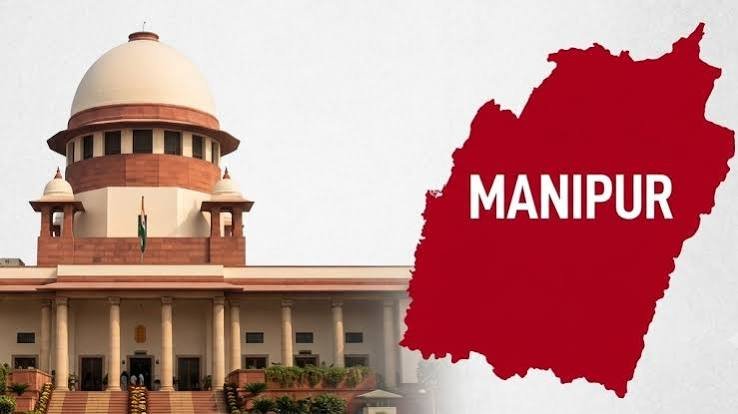
The Supreme Court intensified its scrutiny of Manipur relief camps on September 17 after expressing shock over deaths among internally displaced people living there.
A bench headed by Chief Justice of India Surya Kant, along with Justices Joymalya Bagchi and V Mohana, directed the Manipur Chief Secretary to file an affidavit on the deaths, particularly cases described as unnatural. The bench also sought details of investigations, post-mortems and measures taken to prevent further deaths.
Supreme Court questions camp deaths
The court issued the directions after the Justice Gita Mittal committee and an IAS officer submitted reports on conditions in the relief camps. The material before the bench indicated that more than 30 people had died in the camps. Reports from the hearing referred to 34 death cases.
The bench questioned why authorities conducted post-mortems in only 20 of the 34 reported cases. It also asked the state to explain what action officials took after receiving information about the deaths.
Reports from the hearing separately referred to 25 alleged unnatural deaths. The different figures reflect information from different records and stages of the proceedings. Therefore, the court has asked the Chief Secretary to provide a consolidated account.
Chief Secretary must explain deaths
The Supreme Court asked the Chief Secretary to explain the circumstances surrounding the deaths and provide available records, including post-mortem reports. It also directed the state to describe the measures it has taken to prevent similar incidents.
The directions put renewed attention on the condition of displaced people who continue to depend on relief facilities after the ethnic violence that began in Manipur in May 2023.
The bench also questioned the reported compensation given to families in cases involving alleged unnatural deaths. Reports from the hearing said authorities paid between Rs 20,000 and Rs 30,000 in some such cases.
The court’s questions could push the state to provide clearer information about the causes of deaths and the response of officials inside the camps.
Legal authority gets monitoring role
The Supreme Court also directed the Manipur State Legal Services Authority (MSLSA) to submit a separate status report.
The authority must monitor legal action in cases involving unnatural deaths. It must also ensure that police register first information reports, or FIRs, where necessary and pursue investigations promptly.
Additionally, the MSLSA must monitor whether authorities protect the safety and dignity of internally displaced people in Manipur relief camps.
These directions add a legal oversight mechanism for displaced families who may need assistance in pursuing cases. The court’s intervention also places greater emphasis on access to justice for people living in relief facilities.
Wider Manipur violence cases
The hearing also covered investigations into cases linked to the wider violence in Manipur.
Additional Solicitor General Aishwarya Bhati told the bench that the CBI had investigated 31 cases and filed final reports in 28 of them. Three CBI cases remained under investigation, according to information presented during the hearing.
The Manipur government has also formed 42 Special Investigation Teams across eight districts. These teams have registered 3,020 cases, filed chargesheets in 302 cases and submitted closure reports in 1,583 cases.
Investigators continued work on 1,135 cases, while trials had started in 33 cases handled by the state SITs.
The bench also noted the work of two special trial courts that hear CBI and NIA cases connected to the violence. It expressed hope that those trials would move forward without unnecessary delays.
Next report may clarify camp deaths
The Chief Secretary’s affidavit should give the Supreme Court a clearer picture of deaths in Manipur relief camps. It will also help the court examine the causes recorded in post-mortem reports and the action authorities took in cases classified as unnatural.
The court has specifically asked about criminal investigations, preventive measures and the protection of displaced people. Those questions could help establish whether authorities responded promptly when deaths occurred.
For families living in the camps, the issue goes beyond the number of deaths. They also need safety, legal assistance and access to remedies when authorities suspect wrongdoing.
The Supreme Court’s next review will therefore focus on the state’s response and the evidence it provides. The Chief Secretary’s report should help the court determine what happened in the reported cases and whether authorities need to take further action.