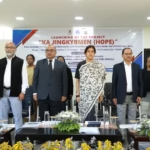


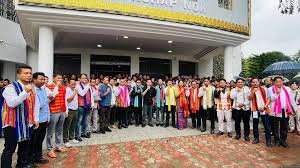
The Tripura Political Tension BJP Boycott has escalated after the Bharatiya Janata Party chose to boycott the TTAADC oath-taking ceremony, with four elected members also skipping the event. This development has intensified political dynamics in the state, raising questions about governance, coordination, and future political strategies.
Manipur Lightning Strike Incident Claims Life and Injures One
Wildlife Rewilding Debate Grows Over Kaziranga Buffalo
Tripura Political Tension BJP Boycott Creates Stir
The political landscape in Tripura has witnessed a sharp turn as the BJP boycotted the TTAADC oath-taking ceremony. The Tripura Political Tension BJP Boycott has drawn significant attention across the state.
Additionally, four elected members chose not to attend the ceremony, which further amplified the situation. This move has sparked debates regarding political alignment and decision-making.
Reasons Behind the Boycott
The BJP’s decision to boycott the ceremony reflects underlying disagreements. The Tripura Political Tension BJP Boycott indicates possible differences over administrative or political issues.
Although specific reasons may vary, such actions often arise from concerns about representation, authority, or policy direction.
Therefore, the boycott signals a deeper political divide that requires careful analysis.
Impact on TTAADC Governance
The Tripura Tribal Areas Autonomous District Council (TTAADC) plays a crucial role in regional governance. The absence of key members during the oath-taking ceremony may affect administrative functioning.
The Tripura Political Tension BJP Boycott could delay decision-making processes and influence governance outcomes.
Moreover, coordination between political groups becomes essential to ensure smooth operations within the council.
Political Reactions and Public Response
The boycott has triggered reactions from various political parties and leaders. The Tripura Political Tension BJP Boycott has become a major topic of discussion in political circles.
Supporters and critics have expressed differing opinions on the move. Some view it as a strategic decision, while others see it as a disruption to democratic processes.
Meanwhile, the public continues to observe how this situation unfolds.
Significance of the Oath-Taking Ceremony
An oath-taking ceremony marks the beginning of official responsibilities for elected members. It symbolizes commitment to governance and public service.
The Tripura Political Tension BJP Boycott has overshadowed the significance of this event.
Such developments can affect the perception of political stability and institutional functioning.
Possible Political Implications
Political boycotts often influence future strategies and alliances. The Tripura Political Tension BJP Boycott may shape upcoming political decisions in the state.
Parties may reassess their positions and explore new approaches to address ongoing challenges.
Additionally, this situation could impact voter perception and political narratives.
Importance of Dialogue and Cooperation
Effective governance requires cooperation among political parties. The Tripura Political Tension BJP Boycott highlights the need for constructive dialogue.
By engaging in discussions, leaders can resolve differences and ensure smooth functioning of institutions.
Collaboration remains essential for addressing public issues and achieving development goals.
Role of Leadership in Resolving Tensions
Strong leadership plays a vital role in managing political tensions. Leaders must focus on finding common ground and building consensus.
The Tripura Political Tension BJP Boycott presents an opportunity for leaders to demonstrate maturity and responsibility.
By prioritizing public interest, they can restore stability and confidence in governance.
Long-Term Impact on State Politics
Political events like this can have lasting effects on the state’s political environment. The Tripura Political Tension BJP Boycott may influence future elections and policy decisions.
Moreover, it can shape the relationship between political parties and governance institutions.
Therefore, handling the situation carefully becomes crucial for long-term stability.
Conclusion
The boycott of the TTAADC oath-taking ceremony marks a significant moment in Tripura’s political landscape. With four elected members also absent, the situation reflects ongoing tensions and challenges.
The Tripura Political Tension BJP Boycott underscores the importance of dialogue, cooperation, and responsible leadership. Moving forward, stakeholders must work together to ensure effective governance and maintain public trust.
FAQs
1. What happened during the TTAADC oath-taking ceremony?
The BJP boycotted the ceremony, and four elected members did not attend.
2. Why did the BJP boycott the event?
The boycott likely reflects political disagreements, although exact reasons may vary.
3. What is TTAADC?
It is the Tripura Tribal Areas Autonomous District Council responsible for regional governance.
4. How does this affect governance?
It may delay decision-making and create coordination challenges within the council.
5. What could happen next?
Political discussions and negotiations may take place to resolve the situation.